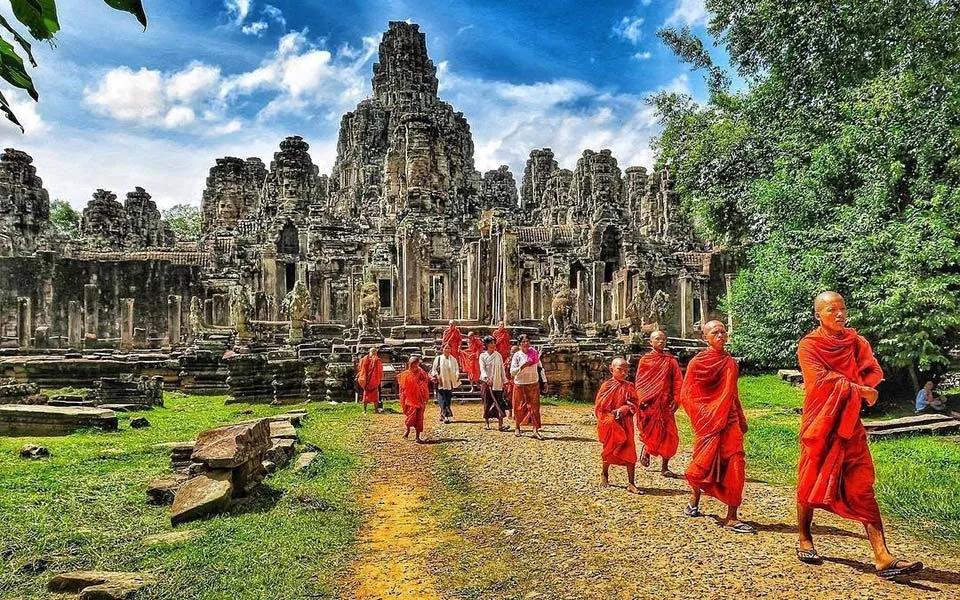
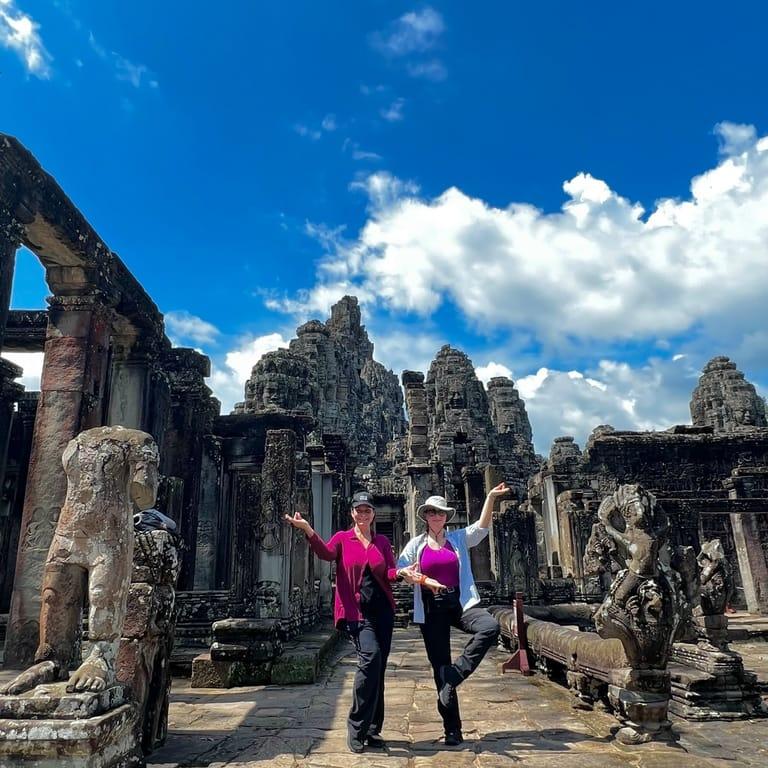
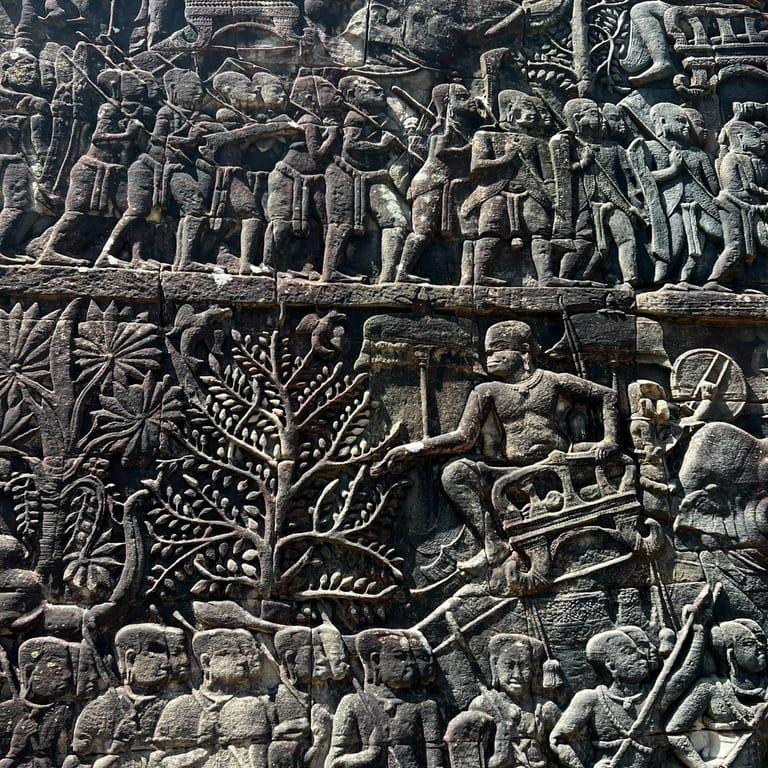
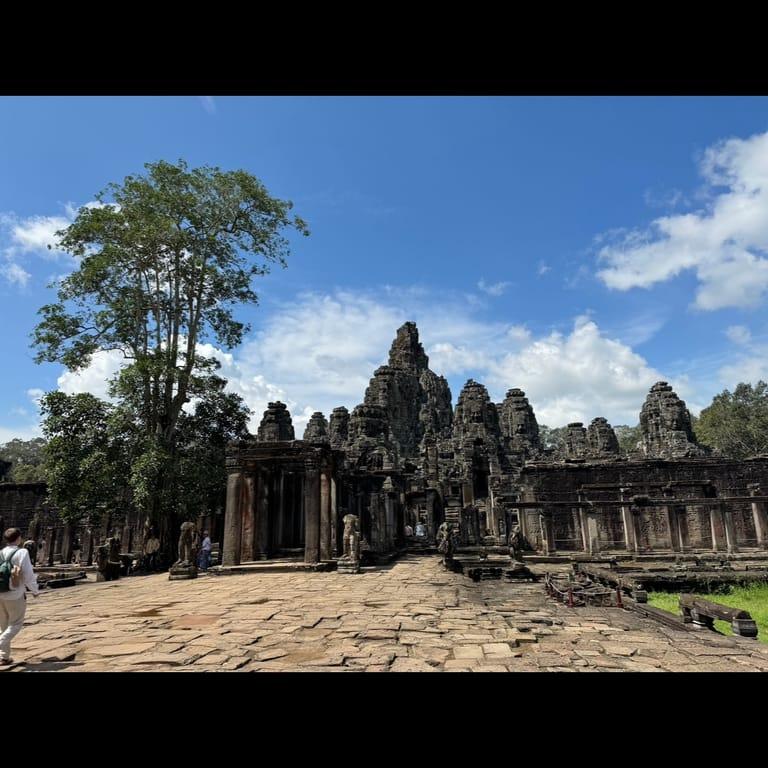
Il Tempio di Bayon, situato nel cuore del sito archeologico di Angkor, è una tappa imperdibile per chi visita Siem Reap. Rinomato per le sue gigantesche facce scolpite e le intricati bassorilievi, questo santuario hindu è una testimonianza della maestria artistica khmer e della spiritualità che permea la regione.
Nestled in the heart of Siem Reap Province, Cambodia, the Bayon Temple is a mesmerizing historical marvel dating back to the late 12th century. This iconic temple stands out for its unique architectural design and the enigmatic over 200 smiling stone faces that adorn its 54 towers, captivating visitors and historians alike.
Construction of this majestic temple began around 1181 under the reign of King Jayavarman VII, a visionary ruler who infused the site with Mahayana Buddhist influences. The temple was designed not only as a place of worship but also as a symbolic representation of the king’s divine authority and spiritual vision.
In the 13th century, during the reign of King Jayavarman VIII, Bayon Temple underwent significant modifications reflecting the empire’s brief return to Hinduism. These changes illustrate the rich religious tapestry and political shifts in ancient Cambodia, making Bayon a living museum of spiritual history.
Today, Bayon Temple is celebrated as a UNESCO World Heritage Site, acknowledged for its breathtaking artistry and cultural importance. Its exquisite stone carvings and serene faces continue to draw travelers, historians, and photographers eager to experience one of Cambodia’s most treasured landmarks.
- 1181: Construction of Bayon Temple begins under King Jayavarman VII.
- 13th century: Temple undergoes modifications during the reign of King Jayavarman VIII reflecting religious changes.
- 20th century: Bayon Temple is recognized as a UNESCO World Heritage Site, ensuring its historical preservation.
Un'esperienza unica tra storia, cultura e spiritualità.
Il Tempio di Bayon si distingue per la sua architettura unica, con 216 facce scolpite nella pietra che sorridono misteriosamente. La sua importanza storica e culturale è inestimabile, offrendo un'intensa immersione nella storia dell'antico Impero Khmer.
Situato nel cuore di Angkor Thom, il Tempio di Bayon è facilmente raggiungibile e rappresenta un punto di riferimento imprescindibile per chi visita Siem Reap. I dettagli raffinatissimi dei bassorilievi che raffigurano scene di vita quotidiana e eventi storici arricchiscono l'esperienza, offrendo un'immersione profonda nell'antica civiltà Khmer.
Nonostante le sue meraviglie, il Tempio di Bayon presenta alcuni aspetti da considerare prima di visitarlo.
- Può essere molto affollato durante le stagioni turistiche di punta.
- Alcune aree potrebbero essere difficili da visitare per persone con mobilità ridotta.
- L'accesso ad alcune aree potrebbe essere limitato a causa di lavori di restauro.
- Le alte temperature e l'umidità possono risultare scomode, specialmente nelle ore più calde.