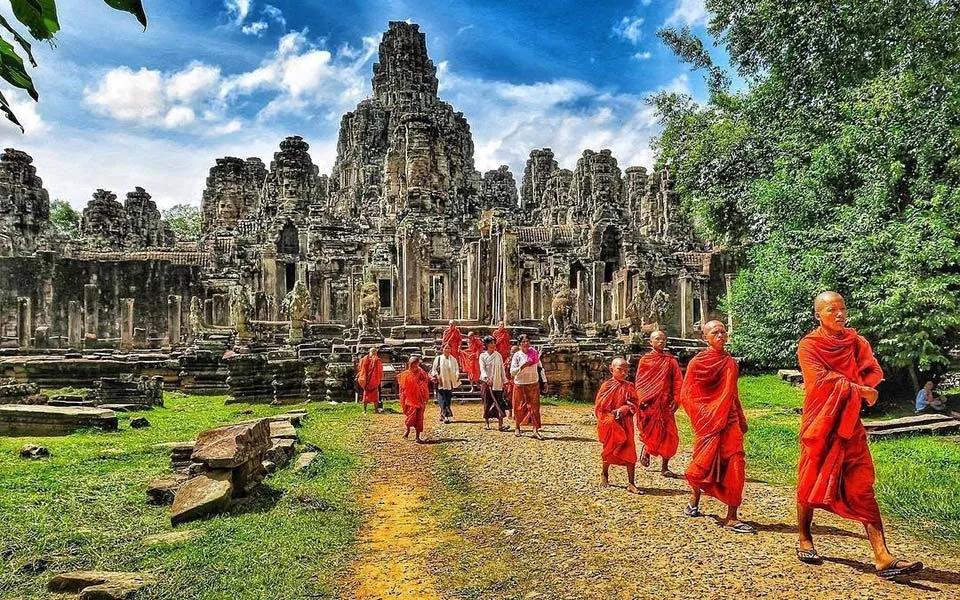
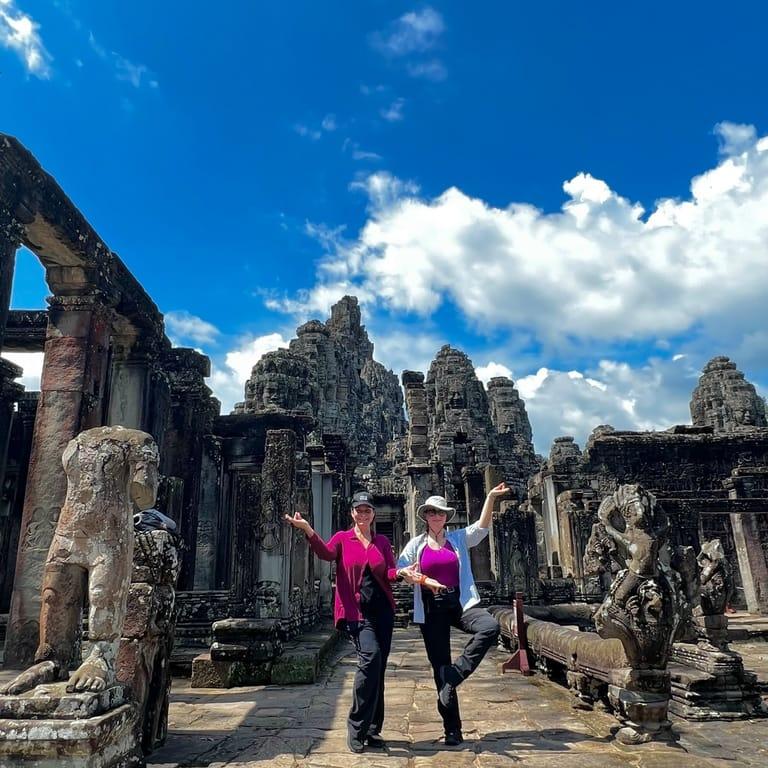
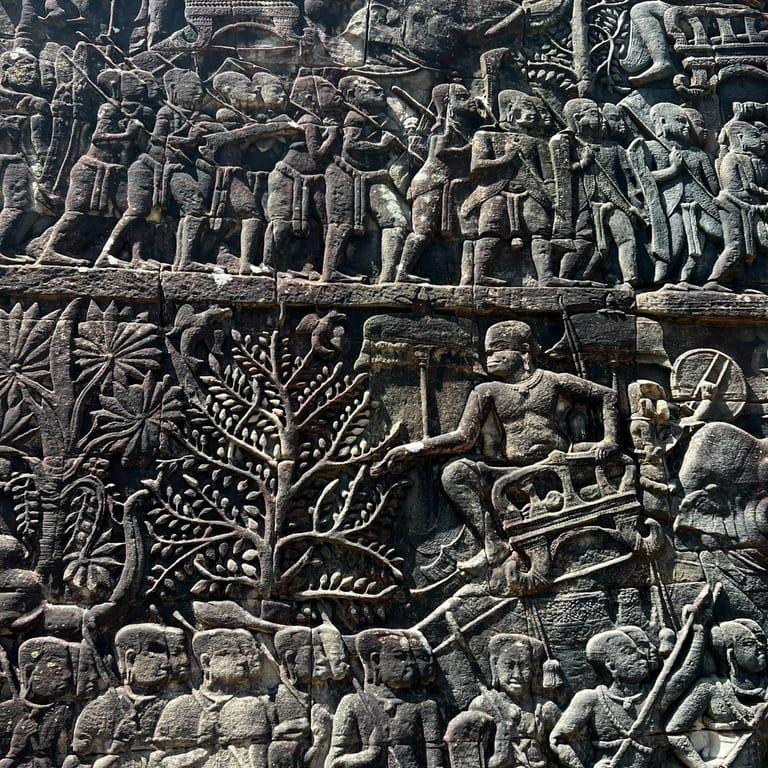
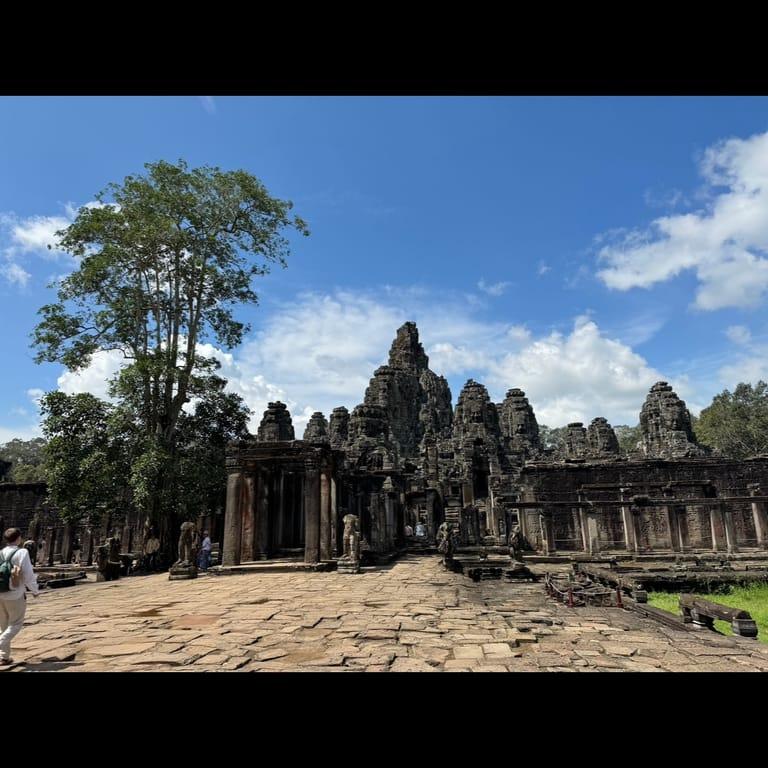
Nestled in the heart of Siem Reap's ancient city, Bayon Temple stands as a breathtaking testament to Khmer art and spirituality. This 12th-century marvel is famed for its enigmatic 200 smiling faces carved into massive stone towers, making it an iconic highlight of the Angkor Archaeological Park. Visitors are captivated not only by the temple's grand scale but also by the intricate bas-reliefs that depict vivid stories of historical battles and everyday life in the Khmer empire.
Bayon Temple's architecture is unlike any other in Cambodia. Its central location within Angkor Thom, the ancient walled city, offers visitors a chance to experience a serene ambiance surrounded by stone faces that seem to watch over the landscape. Walking through its maze-like corridors, you'll encounter bas-reliefs that bring Khmer history and mythology to life, enriching your understanding of the culture and religious devotion that shaped this masterpiece.
- Timing to Visit: Early morning or late afternoon are the perfect times to avoid crowds and enjoy cooler temperatures.
- Entry Fee: No separate fee is required for Bayon Temple as its entrance is covered by the Angkor Pass.
- Facilities: Basic amenities including restrooms and souvenir shops are conveniently located near the temple.
Overwhelmingly praised for its unique smiling faces and detailed bas-reliefs , Bayon Temple offers a spiritual and historical experience that immerses visitors in the grandeur of the Khmer empire. Whether you're a passionate history buff, an avid photographer, or a traveler seeking tranquility, this temple provides an unforgettable adventure amidst Cambodia's rich heritage.
Nestled in the heart of Siem Reap Province, Cambodia, the Bayon Temple is a mesmerizing historical marvel dating back to the late 12th century. This iconic temple stands out for its unique architectural design and the enigmatic over 200 smiling stone faces that adorn its 54 towers, captivating visitors and historians alike.
Construction of this majestic temple began around 1181 under the reign of King Jayavarman VII, a visionary ruler who infused the site with Mahayana Buddhist influences. The temple was designed not only as a place of worship but also as a symbolic representation of the king’s divine authority and spiritual vision.
In the 13th century, during the reign of King Jayavarman VIII, Bayon Temple underwent significant modifications reflecting the empire’s brief return to Hinduism. These changes illustrate the rich religious tapestry and political shifts in ancient Cambodia, making Bayon a living museum of spiritual history.
Today, Bayon Temple is celebrated as a UNESCO World Heritage Site, acknowledged for its breathtaking artistry and cultural importance. Its exquisite stone carvings and serene faces continue to draw travelers, historians, and photographers eager to experience one of Cambodia’s most treasured landmarks.
- 1181: Construction of Bayon Temple begins under King Jayavarman VII.
- 13th century: Temple undergoes modifications during the reign of King Jayavarman VIII reflecting religious changes.
- 20th century: Bayon Temple is recognized as a UNESCO World Heritage Site, ensuring its historical preservation.
アンコール遺跡の象徴的存在、バイヨン寺院は、その独特な建築美と深い歴史的意義から観光客にとって必見のスポットです。216体の微笑みを浮かべる石像が一面に広がり、神秘的な雰囲気を楽しめます。ここは、ユネスコ世界遺産に登録されており、日常の喧騒から離れた静寂と歴史の深さを感じられる場所です。遺跡内の詳細な浮彫は、当時の生活や歴史的出来事を物語っており、文化愛好者にはたまらない魅力があります。
この寺院の魅力は、その独特な建築と歴史的価値にありますが、いくつかの注意点も存在します。ピークシーズンには多くの観光客で賑わい、混雑が予想されるため、静かに観賞したい場合は早朝の訪問がおすすめです。足の不自由な方にとっては、敷地内の一部エリアがアクセスしづらいことも。加えて、遺跡の修復作業により一部の場所が一時的に閉鎖されていることもあるため、事前情報の確認も重要です。高温と湿気も体調管理のポイントです。これらの点を理解して訪れることで、より満足のいく経験ができるでしょう。
この場所の最大の魅力は、そのユニークな建築美と深い歴史的背景にあります。訪れる人々は、216体の微笑みの石像や緻密な浮彫に圧倒されることでしょう。また、中央に位置しアクセスも容易なため、多くの観光ルートの一部として組み込まれています。
Nestled in the heart of Krong Siem Reap, Cambodia, Bayon Temple stands as a magnificent 12th-century masterpiece and a must-visit for travelers exploring the Angkor Thom complex. Famous for its 200 large, enigmatic smiling faces carved into stone walls, this historical gem offers a captivating glimpse into ancient Khmer architecture and religious symbolism.
Bayon Temple’s walls are adorned with intricate carvings that depict historical events, religious tales, and everyday life of the Khmer empire. Visitors can wander through its maze-like corridors, climb short flights of stairs, and walk around to observe all four massive smiling faces that give the temple a truly mysterious and spiritual aura. The well-preserved site provides an immersive experience into Cambodia’s rich cultural heritage.
Plan your visit before sunset to enjoy fewer crowds and beautiful lighting. Since Bayon is often the second stop for guided tours, mornings between 9-10 am can be quite busy. Also, be prepared to walk extensively and climb stairs, so comfortable shoes are a must.
- Buy your Angkor area tickets in advance at the city before heading to the temple, located 6 to 7 kilometers from Siem Reap city center.
- Watch out for playful monkeys that inhabit the temple area, adding a lively touch to your visit.
- Consider hiring a knowledgeable guide to fully appreciate the rich stories behind the carvings and the temple’s historical significance.
Bayon Temple is not only a visual feast but also offers enriching experiences that enhance your visit. Whether you are a history buff, a photography enthusiast, or a curious traveler, there is something special waiting for you.
- Guided Tours - Explore Bayon’s history and architecture with expert guides who bring the ancient stories to life. Best of all, these guides are available at no additional cost, making the experience accessible to all visitors.
- Photography Opportunities - Capture the iconic smiling faces and the labyrinth of intricate carvings that make Bayon a photographer’s dream. The temple’s unique lighting near sunset offers stunning photo moments, perfect for social media and travel keepsakes.
Bayon Temple offers a rare blend of spiritual grandeur, artistic mastery, and historical depth. Its well-preserved carvings and majestic stone faces create an atmosphere unlike any other temple in the Angkor region. The temple is a testament to the power and belief of the Khmer civilization and invites visitors to lose themselves in its maze-like interior and expansive courtyards.