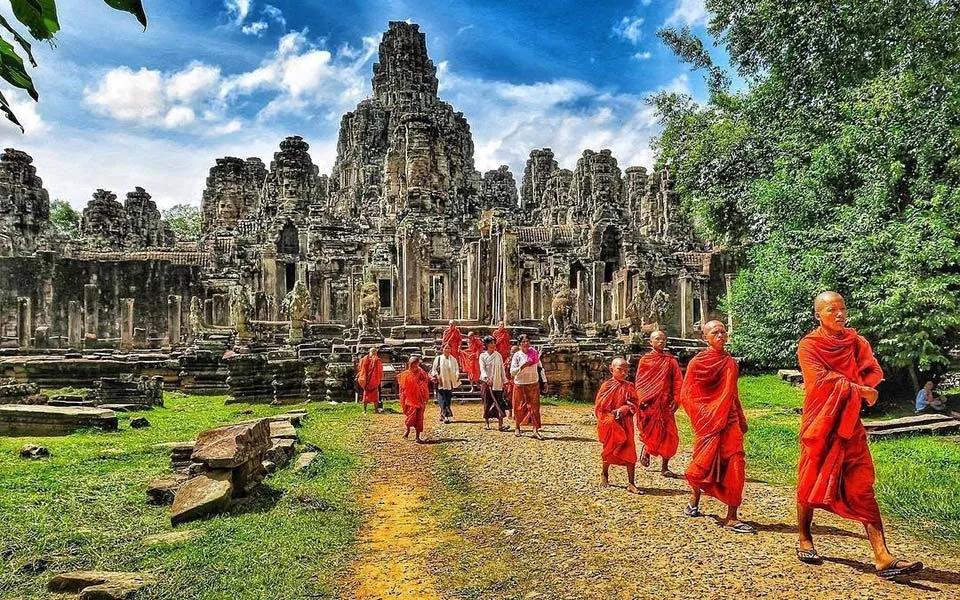
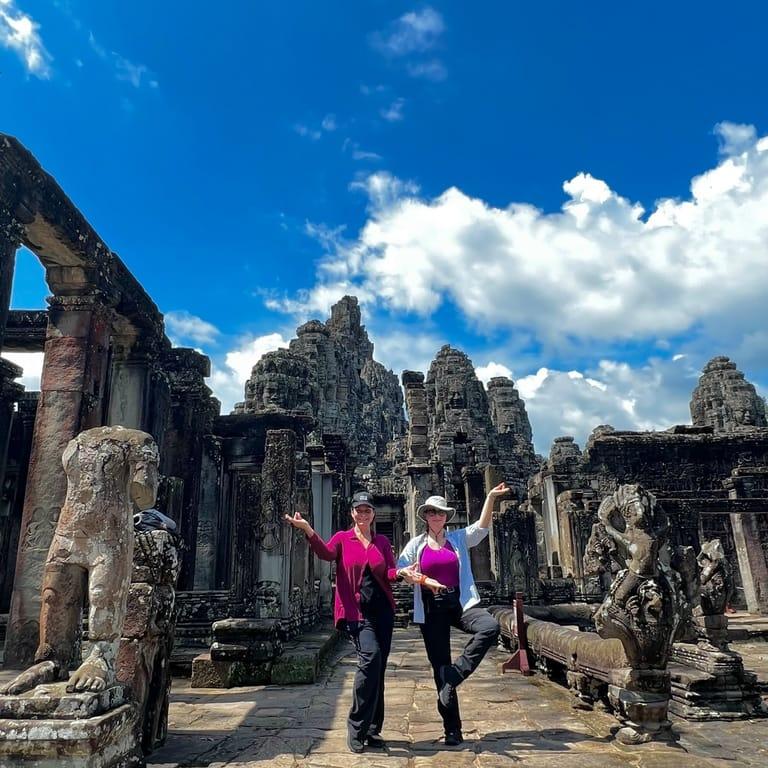
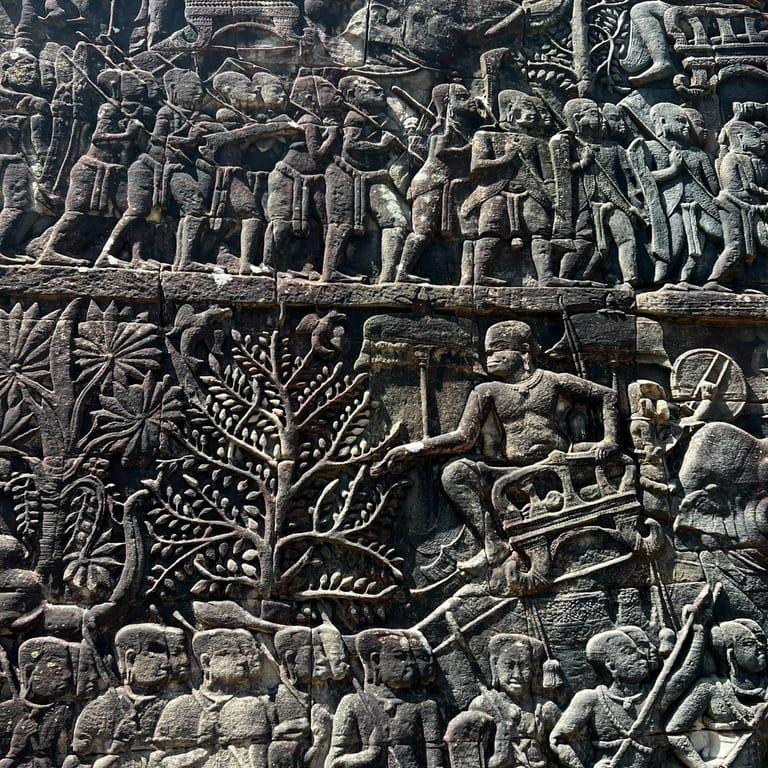
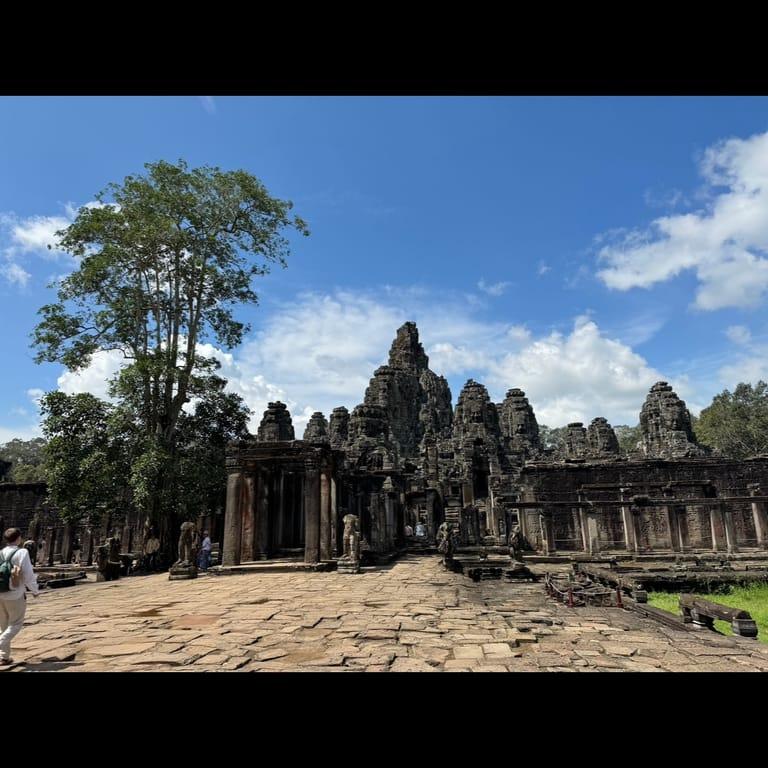
Nestled in the heart of Siem Reap's ancient city, Bayon Temple stands as a breathtaking testament to Khmer art and spirituality. This 12th-century marvel is famed for its enigmatic 200 smiling faces carved into massive stone towers, making it an iconic highlight of the Angkor Archaeological Park. Visitors are captivated not only by the temple's grand scale but also by the intricate bas-reliefs that depict vivid stories of historical battles and everyday life in the Khmer empire.
Bayon Temple's architecture is unlike any other in Cambodia. Its central location within Angkor Thom, the ancient walled city, offers visitors a chance to experience a serene ambiance surrounded by stone faces that seem to watch over the landscape. Walking through its maze-like corridors, you'll encounter bas-reliefs that bring Khmer history and mythology to life, enriching your understanding of the culture and religious devotion that shaped this masterpiece.
- Timing to Visit: Early morning or late afternoon are the perfect times to avoid crowds and enjoy cooler temperatures.
- Entry Fee: No separate fee is required for Bayon Temple as its entrance is covered by the Angkor Pass.
- Facilities: Basic amenities including restrooms and souvenir shops are conveniently located near the temple.
Overwhelmingly praised for its unique smiling faces and detailed bas-reliefs , Bayon Temple offers a spiritual and historical experience that immerses visitors in the grandeur of the Khmer empire. Whether you're a passionate history buff, an avid photographer, or a traveler seeking tranquility, this temple provides an unforgettable adventure amidst Cambodia's rich heritage.
Nestled in the heart of Siem Reap Province, Cambodia, the Bayon Temple is a mesmerizing historical marvel dating back to the late 12th century. This iconic temple stands out for its unique architectural design and the enigmatic over 200 smiling stone faces that adorn its 54 towers, captivating visitors and historians alike.
Construction of this majestic temple began around 1181 under the reign of King Jayavarman VII, a visionary ruler who infused the site with Mahayana Buddhist influences. The temple was designed not only as a place of worship but also as a symbolic representation of the king’s divine authority and spiritual vision.
In the 13th century, during the reign of King Jayavarman VIII, Bayon Temple underwent significant modifications reflecting the empire’s brief return to Hinduism. These changes illustrate the rich religious tapestry and political shifts in ancient Cambodia, making Bayon a living museum of spiritual history.
Today, Bayon Temple is celebrated as a UNESCO World Heritage Site, acknowledged for its breathtaking artistry and cultural importance. Its exquisite stone carvings and serene faces continue to draw travelers, historians, and photographers eager to experience one of Cambodia’s most treasured landmarks.
- 1181: Construction of Bayon Temple begins under King Jayavarman VII.
- 13th century: Temple undergoes modifications during the reign of King Jayavarman VIII reflecting religious changes.
- 20th century: Bayon Temple is recognized as a UNESCO World Heritage Site, ensuring its historical preservation.
De Bayon Tempel is beroemd om zijn unieke architectuur, met 216 stenen gezichten die een mystieke sfeer creëren. Het is een plek die doordrenkt is van geschiedenis en cultuur, en biedt bezoekers de kans om een diepere band te voelen met het oude Khmer-rijk.
- Een centrale locatie binnen Angkor Thom, waardoor het gemakkelijk te bereiken is.
- De serene en betoverende sfeer die het tempelcomplex uitstraalt.
- Geschiedenisliefhebbers kunnen genieten van de rijke symboliek en bas-reliëfs die dagelijks leven en belangrijke gebeurtenissen afbeelden.
- Het kan druk zijn tijdens piekseizoenen, wat het bezoek minder intiem maakt.
- Voor bezoekers met mobiliteitsproblemen kunnen sommige delen uitdagend zijn om te betreden.
- Beperkte voorzieningen binnen het tempelcomplex kunnen de ervaring voor sommige bezoekers beperken.
- Restauratiewerkzaamheden kunnen de toegang tot bepaalde gebieden beperken.
- De hoge temperaturen en vochtigheid kunnen voor sommige bezoekers onaangenaam zijn.
Het Bayon Tempel is niet alleen een architectonisch meesterwerk, maar ook een levendig museum dat de rijke Khmer-geschiedenis tot leven brengt. Met zijn iconische gezichten die naar alle windrichtingen kijken, biedt dit tempelcomplex een unieke blik op de spirituele en culturele essentie van Cambodja.
Het bezoeken van het Bayon Tempel biedt een diepgaande culturele ervaring die je niet snel zult vergeten. Van de prachtige architectuur tot de boeiende geschiedenis en de mogelijkheid om je creativiteit te uiten tijdens workshops, dit is het ultieme avontuur voor cultuur- en geschiedenis liefhebbers.