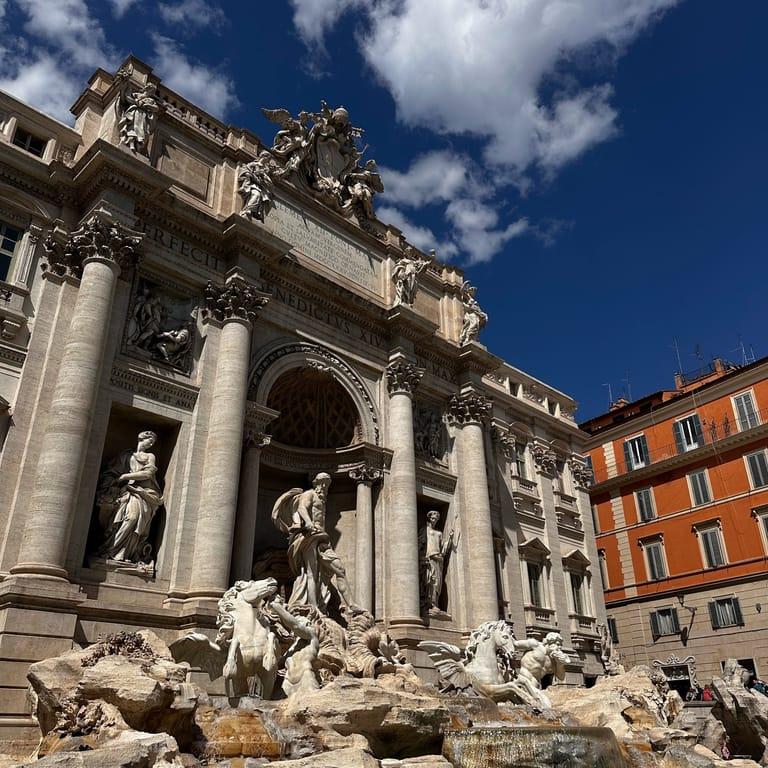
De Trevi-fontein, een iconisch barokkunstwerk in het hart van Rome, is een must-see voor elke reiziger die de Eeuwige Stad bezoekt. Het fontein staat bekend om zijn indrukwekkende sculpturen en de romantische traditie van het gooien van een muntje voor geluk en een terugkeer naar Rome.
Nestled in the heart of Rome's historic center, the Trevi Fountain stands as a breathtaking Baroque masterpiece and an emblem of the Eternal City's rich heritage. This iconic landmark, located at Piazza di Trevi, marks the grand terminus of the ancient Aqua Virgo aqueduct, a vital water source commissioned by Emperor Augustus in 19 BCE to supply fresh water to Rome's inhabitants.
The fountain as we admire it today was conceived in 1732 when Pope Clement XII commissioned renowned architect Nicola Salvi to design a monumental fountain to celebrate Aqua Virgo. Salvi's vision embraced a dramatic Baroque style, complete with sculpted figures representing Oceanus and sea creatures, capturing the theatrical spirit of 18th-century art. Although Salvi passed away in 1751 before its completion, Giuseppe Pannini carried on the work, culminating in the fountain's grand inauguration in 1762.
Throughout its nearly three-century existence, the Trevi Fountain has undergone several significant restorations to preserve its beauty and structural integrity. In 1988, the first major restoration addressed discoloration caused by urban smog, revitalizing its brilliant travertine marble facade. A decade later, in 1998, repairs tackled emerging cracks and deterioration. Most recently, a €2.2 million restoration sponsored by the luxury fashion house Fendi between 2013 and 2015 enhanced the fountain's illumination and reinstated its intricate details, ensuring that this magnificent work of art continues to inspire visitors worldwide.
The Trevi Fountain is more than a stunning architectural marvel; it is a symbol of Rome's timeless charm and the rich tapestry of its history. Visitors flock to this enchanting spot to marvel at the dynamic sculptures and the soothing cascade of water, which creates an almost magical ambiance. A beloved tradition invites travelers to toss a coin over their shoulder into the fountain's waters, a ritual said to guarantee a return to the Eternal City.
- Ancient aqueduct roots – Built upon the Aqua Virgo aqueduct commissioned by Emperor Augustus in 19 BCE.
- Baroque design – Designed by Nicola Salvi and completed by Giuseppe Pannini in 1762.
- Restoration efforts – Multiple restorations have preserved its glowing façade, including a major 2013-2015 project sponsored by Fendi.
- Visitor traditions – The famous coin toss ritual symbolizes a promise to return to Rome.
Nestled in the heart of Rome, the Trevi Fountain stands as a testament to Baroque architecture and artistic brilliance. Created by architect Nicola Salvi and completed in 1762, this aqueduct-fed fountain features intricate sculptures that captivate visitors from around the globe. Whether during the day with sunlight glimmering on the water or at night when it’s beautifully illuminated, the Trevi Fountain offers an enchanting atmosphere.
- Stunning Baroque architecture
- Rich historical significance
- Free admission
- Open 24 hours
- Tradition of coin tossing for good luck
- Beautifully illuminated at night
- Central location in Rome
- Close to other major attractions
- Can be very crowded, especially during peak tourist seasons
- Not wheelchair accessible due to stairs
- Swimming in the fountain is prohibited
- Pickpockets may be present in crowded areas
The Trevi Fountain is ideal for visitors seeking to immerse themselves in Rome's rich history and architecture. It's perfect for couples looking for a romantic setting, families wanting to experience a piece of Italian culture, and solo travelers capturing memorable photographs of one of the most iconic landmarks in the world.
Visitors should be aware that the Trevi Fountain can be particularly crowded during peak tourist seasons. It is best to visit early in the morning or late in the evening to savor its beauty with fewer people around. Moreover, it is important to respect the regulations, such as not swimming in the fountain or drinking its water.
In conclusion, the Trevi Fountain is not just a tourist attraction; it embodies the artistic and cultural essence of Rome. Despite some drawbacks such as crowding and accessibility challenges, its stunning beauty and historical significance make it a must-visit destination. Don't forget to toss a coin for good luck and enjoy the experience of being part of a rich tradition.
- What is the best time to visit
- The best time to visit is early morning or late evening to avoid crowds.
- Is it wheelchair accessible
- No, the Trevi Fountain is not wheelchair accessible due to stairs.
De Trevi Fontein is een van de meest iconische en geliefde toeristische attracties in Rome, Italië.
Gelegen in het hart van Rome, is de Trevi Fontein een meesterwerk van barokke kunst en architectuur. Bezoekers worden betoverd door de indrukwekkende beeldhouwwerken en de sprankelende waterstraaltjes die een magische sfeer creëren. Het is niet alleen een prachtige plek om foto's te maken, maar ook een plek vol geschiedenis en legendes.